Apple iPhone 18 Pro and Pro Max: What Is New Inside?
Apple’s new Pro lineup introduces the 2 nm A20 Pro, variable-aperture imaging, redesigned thermal management, Apple’s C2 modem, and longer battery life. TechInsights will investigate the hardware behind Apple’s claims.
Apple has introduced the iPhone 18 Pro and iPhone 18 Pro Max, with significant changes to processing, imaging, connectivity, cooling, and battery systems.
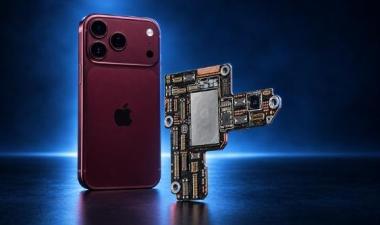
At the center is the 2 nm A20 Pro, paired with a new chip package and larger vapor chamber designed to improve sustained performance.
Apple’s announcement tells us what these technologies are designed to do. As devices become available, TechInsights will investigate the components, suppliers, costs, and semiconductor technologies behind them.
Stay Ahead of the iPhone 18
Get the Latest Analysis
Sign up to receive updates as TechInsights releases new teardown findings, reverse-engineering analysis, and insights following Apple’s announcement.
Apple iPhone September 9, 2026
What Is New in the A20 Pro?
The A20 Pro is manufactured using 2-nanometer process technology and features a six-core CPU with integrated Neural Accelerators, a seven-core GPU, and dual 16-core Neural Engines.
Apple claims 50% more memory bandwidth and twice the AI processing performance of the A19 Pro, supporting on-device AI, computational photography, gaming, Apple Intelligence, and new Siri experiences in iOS 27.
TechInsights will examine the A20 Pro’s process technology, die architecture, IP, packaging, memory interface, and silicon area allocation to understand where Apple has concentrated its transistor budget.
Is Apple Replacing More Third-Party Connectivity Silicon?
The iPhone 18 Pro and Pro Max include Apple’s N1 wireless networking chip and C2 cellular modem system.
N1 supports Wi-Fi 7, Bluetooth 6, and Thread, while Apple says C2 provides faster uploads than C1X with 15% lower energy consumption and adds mmWave support in the United States.
The move continues Apple’s expansion into silicon previously supplied by third parties.
TechInsights will investigate which suppliers retain important design wins across RF, power management, memory, storage, sensors, and supporting connectivity systems.
How Has Apple Changed the Thermal Architecture?
Apple has redesigned the A20 Pro package and cooling system.
The new architecture positions the processor beside the memory rather than placing memory within the processor’s thermal path, allowing the A20 Pro to connect directly to a next-generation vapor chamber.
Apple says the vapor chamber provides three times more surface area and enables up to 40% better sustained performance than the iPhone 17 Pro.
Once devices are available, TechInsights will examine how Apple has arranged the processor, memory, logic board, thermal materials, and vapor chamber, and whether the architecture provides additional advantages for device thickness, signal integrity, or repairability.
What Changed in Battery Life and Charging?
Apple claims up to 36 hours of video playback on the iPhone 18 Pro and 45 hours on the iPhone 18 Pro Max, aided by A20 Pro efficiency and additional internal space in eSIM-only models.
Both devices can also reach 50% charge in approximately 15 minutes using a wired connection.
TechInsights will investigate the battery capacities, cell construction, suppliers, charging components, and power-management architecture behind these gains.
What Is New in the iPhone 18 Pro Camera?
The new 48 MP Fusion Main camera introduces variable aperture to the iPhone for the first time.
A six-blade mechanism automatically adjusts aperture based on lighting and depth of field. New Pro controls also provide four aperture settings plus manual control over shutter speed, white balance, and exposure.
The mechanical aperture adds optical, mechanical, and packaging complexity to an already space-constrained camera module.
TechInsights will examine the image sensor, lens assembly, aperture mechanism, actuator, image-stabilization system, and semiconductor suppliers behind the new camera architecture.
Why Does Apple Reference Image Matter?
The iPhone 18 Pro also introduces Apple Reference Image, designed to help users verify whether photographs have been altered.
Apple says the Main camera sensor can sign the image data it captures. In Reference mode, that signed sensor data is processed into an unalterable reference image that can be compared with an edited version.
As generative AI makes manipulated images increasingly difficult to identify, the technology could have implications for photojournalism, digital evidence, content verification, and the wider image-sensor ecosystem.
TechInsights analysis will help determine whether specialized security capabilities are integrated into the image sensor, A20 Pro, secure hardware, or supporting camera components.
What Will TechInsights Investigate Inside the iPhone 18 Pro?
Apple’s announcement leaves several important technical and commercial questions unanswered:
- How is the A20 Pro’s 2 nm silicon constructed?
- Who supplies the camera sensors, memory, storage, display, and RF components?
- How does the variable-aperture camera work at the component level?
- What changed inside Apple’s C2 modem and N1 wireless chip?
- How does the new processor package connect to the vapor chamber?
- How do component costs compare with the iPhone 17 Pro generation?
As devices become available, TechInsights will investigate these questions through device analysis, semiconductor reverse engineering, component identification, device costing, and market intelligence.
Go Beyond the Apple Announcement
Apple has revealed what the iPhone 18 Pro and Pro Max can do. TechInsights will investigate how they were built, which components and semiconductor technologies are inside, and what Apple’s choices mean for suppliers, competitors, and the smartphone market.
Sign in or create a free TechInsights Platform account to follow the iPhone 18 Pro, iPhone 18 Pro Max, and iPhone Duo and be alerted as new analysis becomes available.