The advent of the self-driving car promises to usher in a new era of personal mobility and forever change the way people think of the automobile. Along with data connectivity and electric vehicles, autonomous driving systems will drive unprecedented levels of semiconductor content in cars, including GPUs, FPGAs, dedicated ASICs, and power semiconductors. A complex set of technologies, both in the cloud and at the edge, are needed to make autonomous vehicles (AVs) a safe, efficient, and enjoyable mode of travel.
The convergence of the automotive and technology industries is accelerating the pace of innovation in the mobility and transportation sectors, creating opportunities for new players and emerging business models that are disrupting the established industry structure. This dynamic has given rise to four megatrends that are shaping the future of mobility and changing the competitive landscape of the automotive industry.
Electric Vehicles:
Clean energy policies are stimulating the development of alternative-fuel vehicles, signaling a long-term shift from the internal combustion engine to electric powertrains. These vehicles will utilize advanced battery management systems and specialized power semiconductor devices.
Connected Cars:
Vehicle connectivity is bringing new services and capabilities into the car and enabling cars to communicate directly with other vehicles, pedestrians, and city and highway infrastructure with vehicle-to-everything (V2X) communications through 5G and dedicated short-range communications (DSRC) technologies.
Autonomous Vehicles:
The application of artificial intelligence (AI) and machine learning (ML) technologies to driving automation is making the self-driving car a reality, evolving from advanced driver assistance systems (ADAS) to partial and full autonomous vehicles. Sensing and perception technologies, such as lidar, radar, ultrasonic, embedded vision systems, GPS receivers and inertial measurement units (IMU) are critical elements of autonomous vehicles.
Smart Mobility:
Ubiquitous connectivity and data analytics are enabling the development of technology platforms for a wide variety of last-mile transportation services, including ride-hailing, pooling, car-sharing, free-floating car-sharing, peer-to-peer (P2P) services, forming the foundation of a new smart-mobility industry.
Automotive technical intelligence and intellectual property management can help automakers and suppliers protect their market position and identify additional revenue streams through competitive benchmarking, patent licensing negotiation, and indemnification. This process assists in market entry due diligence decisions and helps companies understand the intellectual property and technology strengths of their competitors to enable differentiation, guide important technical design decisions, and guide the acquisition of patents to enable lower-risk market entry.

Apple iPhone 18 Memory Costs: DRAM & NAND Price Pressure
DRAM and NAND prices are rising through the iPhone 18 launch. See what higher memory costs could mean for Apple, AI, BOM costs, and smartphone strategy.

Apple iPhone 18 Pro: A20 Pro, Camera, C2 Modem & Key Changes
Explore what is new in the Apple iPhone 18 Pro and Pro Max, including the 2 nm A20 Pro, variable-aperture camera, C2 modem, cooling, and battery.
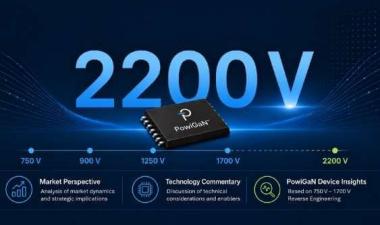
Can 2200 V PowiGaN Challenge Silicon Carbide?
Access TechInsights’ special report on Power Integrations’ 2200 V PowiGaN demonstration and its potential impact on high-voltage power semiconductor markets.

The Authoritative Information Platform to the Semiconductor Industry.