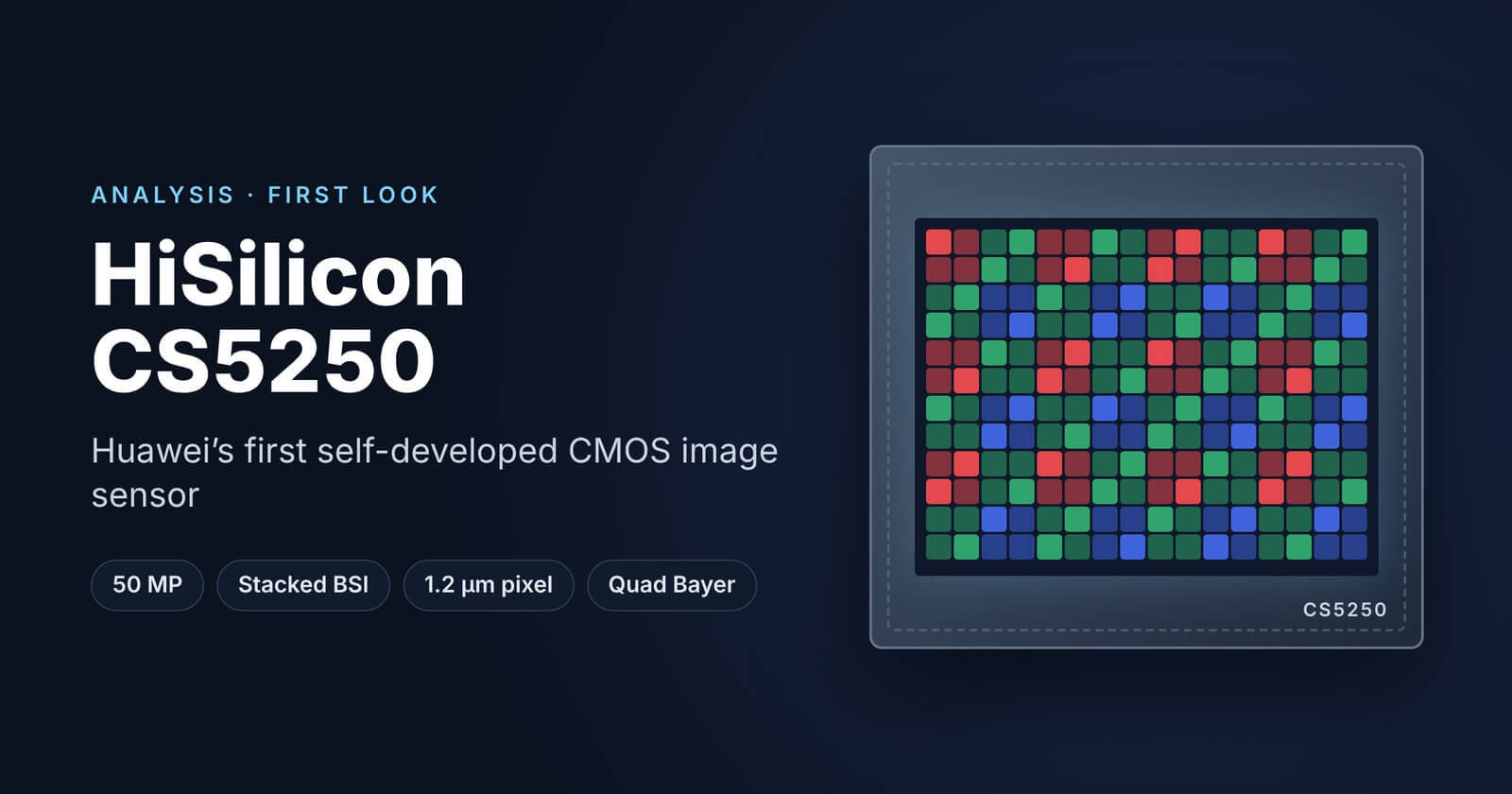
Huawei's HiSilicon has introduced its first self-developed CMOS image sensor (CIS): the 50-megapixel CS5250. TechInsights' teardown confirms the sensor inside the Xiaotu S7 PRO MAX action camera, offering an early look at HiSilicon's move into the image sensor market.
Developed with imaging solution provider Gkuvision [1], the CS5250 is a stacked, back-illuminated sensor with a 1.20 µm pixel pitch and a quad Bayer (2 × 2) color filter array. These preliminary findings establish the sensor's key specifications and physical dimensions. For a deeper look at its construction and imaging technology, sign up for the TechInsights Platform to access the full technical analysis.
What is the HiSilicon CS5250?
The HiSilicon CS5250 is a 50-megapixel CMOS image sensor developed by Huawei's semiconductor subsidiary, HiSilicon. Its announced specifications include stacked back-illuminated (BSI) construction, a 1.20 µm pixel pitch, and a quad Bayer color filter array. The sensor is featured in the Xiaotu S7 PRO MAX action camera, developed with imaging solution provider Gkuvision.
The CS5250's introduction is a notable step in HiSilicon's image sensor development. It also gives the industry a specific commercial device to examine as Huawei expands its semiconductor capabilities.
CS5250 confirmed in the Xiaotu S7 PRO MAX teardown
TechInsights' teardown confirmed the CS5250 inside the Xiaotu S7 PRO MAX action camera. The camera's printed wiring board (PWB) carries the CS5250 marking, matching the part number identified during the teardown.
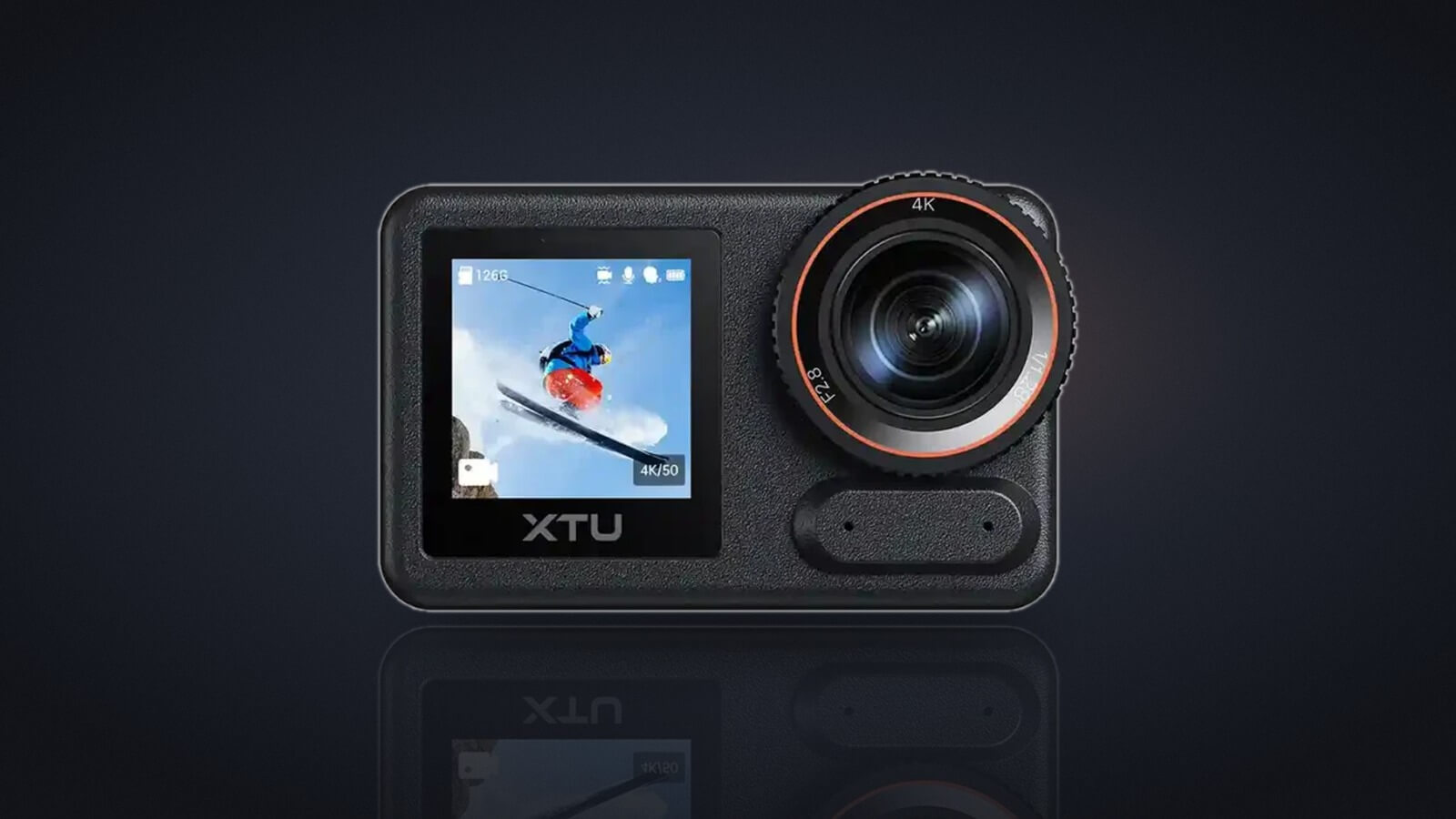
That confirmation connects HiSilicon's first self-developed CIS to a commercial camera product. Examining the sensor in the context of the finished camera provides an early view of its role in a complete imaging system.
What did the CS5250 teardown reveal?
Preliminary optical analysis of the decapped CS5250 found a die measuring 11.57 mm × 8.67 mm, with an area of approximately 100.3 mm². The pixel array measures 10.09 mm × 7.57 mm and has a diagonal of 12.61 mm.
| Feature | Measurement |
|---|---|
| Die size | 11.57 mm × 8.67 mm |
| Die area | ≈ 100.3 mm² |
| Pixel array | 10.09 mm × 7.57 mm |
| Array diagonal | 12.61 mm |
| Pixel pitch | 1.20 µm |
| Color filter array | Quad Bayer (2 × 2) |
A close-up inspection near the center of the array identified a quad Bayer color filter array and a 1.20 µm pixel pitch. These observations give an initial picture of the sensor's physical size and pixel architecture. The full TechInsights reports examine further details of the sensor's stack, pixel, and readout technologies.
Why does HiSilicon's first CIS matter?
High-end CMOS image sensors require advances across sensor design and manufacturing. The CS5250 marks HiSilicon's entry into this area with a 50-megapixel stacked BSI device, and its presence in a commercial action camera makes the sensor available for technical examination.
For Huawei, the CS5250 is a step in developing in-house semiconductor technology. For the image sensor industry, it is a new product to follow as HiSilicon builds its capabilities and competes in the mobile image sensor market led by Sony, Samsung, OmniVision, GalaxyCore, and SmartSens. The teardown provides initial findings about the device; the full analysis offers the detail needed to assess its design and technology.
CS5250 at a glance
- Resolution
- 50 MP
- Type
- Stacked BSI CIS
- Pixel pitch
- 1.20 µm
- CFA
- Quad Bayer (2 × 2)
- Die area
- ≈ 100.3 mm²
- Found in
- Xiaotu S7 PRO MAX
- Partner
- Gkuvision
In the Platform
Three reports cover the CS5250 and its imaging system, from device essentials to the image signal processor.
See the reportsAccess the complete TechInsights CS5250 analysis
TechInsights published a Special Report on the HiSilicon CS5250 and launched several technical reports covering the CS5250 CIS and image signal processor (ISP) dies that are scheduled to publish over the next few months starting with the Device Essentials Folder in early December.
Sign up for the TechInsights Platform to access the complete analysis and receive real-time updates as new findings are published.
- DEF-2610-803Device Essentials FolderView report
- DEP-2611-801Device Essentials PlusView report
- ISP-2611-801Advanced Image Signal ProcessorView report