Carbon in the Age of AI Chips
Earth Day eBook | TechInsights
10 Min Read April 16, 2026
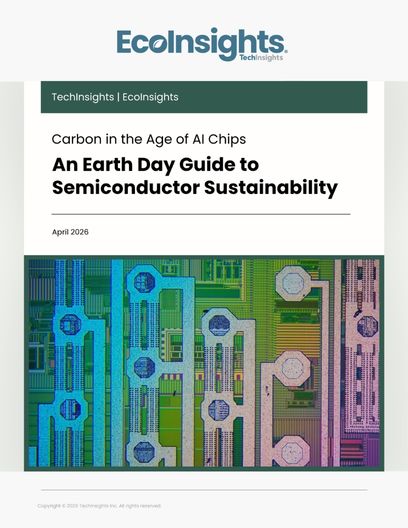
An Earth Day Guide to Semiconductor Sustainability
In 2026, the biggest carbon decisions in semiconductor design aren't made at the reporting stage — they're made at the design table. AI accelerators, high-bandwidth memory, and advanced node manufacturing are concentrating embodied emissions faster than most teams can measure.
This Earth Day, TechInsights' sustainability experts break it down.
What you'll learn
Assurance has opened a door that wasn't previously available: the ability to use TechInsights' PCF data directly in RFP and RFI responses. European supply chains in particular are now routinely requesting — and in some cases requiring — that carbon footprint data be ISO 14067 verified before it can be accepted. Because EcoInsights has achieved that assurance, TechInsights customers can now pass that credibility downstream to their own customers, meeting disclosure requirements that would otherwise require costly independent LCA work.
The numbers shaping semiconductor sustainability in 2026
- 186M metric tons of CO₂e — projected fabrication emissions in 2026
- 247M metric tons projected by 2030
- 26% → 42% — leading-edge node share of total fab emissions, 2026 to 2030
- Scope 3 is no longer optional — regulators, customers, and investors are asking for answers with evidence, not estimates
Turn carbon data into action
EcoInsights links carbon outcomes to the underlying drivers at the node, toolset, component, and supplier level. This ensures that teams can:
- Quantify embodied carbon across manufacturing, components, and systems
- Compare design options and supplier choices side by side
- Act on the decisions that drive the most impact, earlier in the process
Meet the Authors

Stephen Russell is a Senior Technical Fellow at TechInsights, specializing in sustainability. He is the lead author of this eBook and a key contributor to TechInsights' EcoInsights platform.
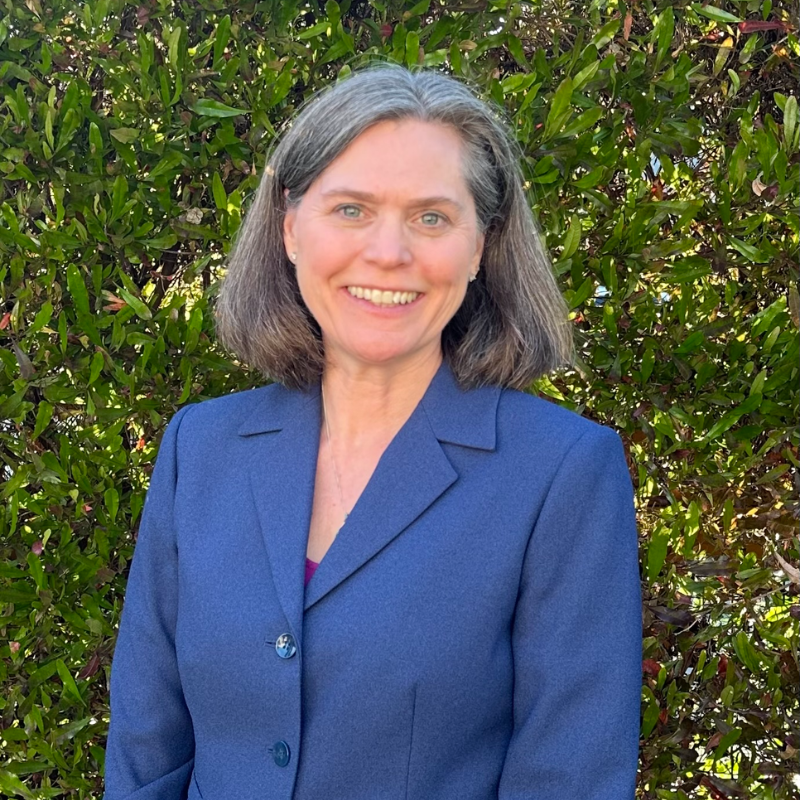
Lara Chamness is a Senior Sustainability Analyst at TechInsights whose expertise includes sustainability in the semiconductor industry. She contributed key analysis to this Earth Day publication.