Make credible decisions with trusted, easy-to-understand answers from AI-powered Insightful Chat.
Latest Blogs and Commentary
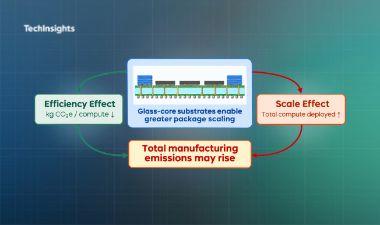
The Glass Substrate Paradox: Can Advanced Packaging Scale AI Without Scaling Carbon?
Glass-core substrates may improve AI package yield and carbon intensity, but larger accelerators could still increase total semiconductor emissions. We explore the implications of this "AI scaling paradox."
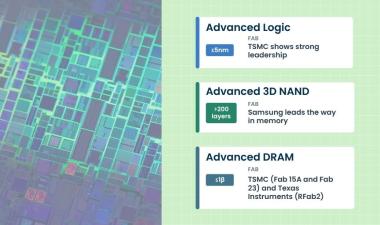
Who Really Operates the World’s Greenest Fab?
TechInsights’ experimental Most Sustainable Fab Ranking compares the environmental performance of 218 global semiconductor manufacturing facilities.

How Much Carbon Does an AI-Generated Answer Emit?
The question sounds as though it should have a simple answer: select the accelerator, look up its power consumption, and calculate the emissions. Real AI infrastructure does not work that way.
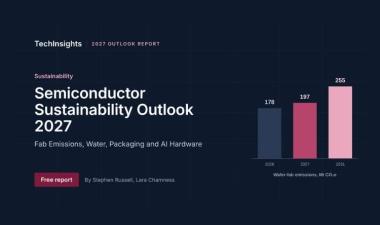
Semiconductor Sustainability Outlook 2027: Fab Emissions, Water, Packaging and AI Hardware
TechInsights 2027 semiconductor sustainability outlook: fab emissions rise to 197 Mt CO₂e as AI, memory and packaging growth outpace efficiency gains.

The Chip Insider®–Data Center water scare
Inside G. Dan Hutcheson’s latest analysis, the data center water debate takes an unexpected turn as he reveals why traditional cloud data centers and newer AI data centers have vastly different water demands and why AI may not be the water problem many believe it to be.

Why Semiconductor Emissions are Outpacing Silicon Shipments
Semiconductor emissions are forecast to grow faster than silicon shipments through 2031. See how process nodes, electricity, and fab locations shape the outlook.

The AI Power Paradox: Why Datacenter Emissions Are Outpacing Grid Decarbonization
Datacenter emissions are rising as AI capacity expands. See why electricity demand could outpace grid decarbonization through 2031.

Don’t Let Carbon Compliance Cost You Customers: The New Rules for Semiconductor Supply Chains
Accurate carbon reporting is now required across the semiconductor supply chain. Learn how to build an auditable data strategy to maintain your market position.

Beyond the Leading Edge: The Overlooked Opportunity in Mature-Node Decarbonization
Leading-edge processes dominate conversations about semiconductor sustainability, but mature-node chip manufacturing will remain responsible for a significant share of fabrication emissions through 2030. See why decarbonizing mature-node production is essential.
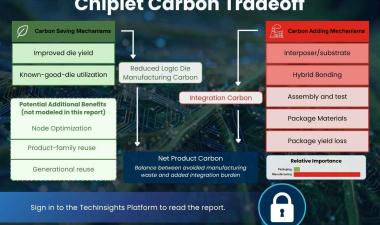
The Carbon Calculus of Chiplets: When Modularity Meets Environmental Impact
Explore whether chiplet-based architectures are improving semiconductor sustainability through yield-complexity tradeoffs, featuring a case study on the Apple M5 Pro architecture.
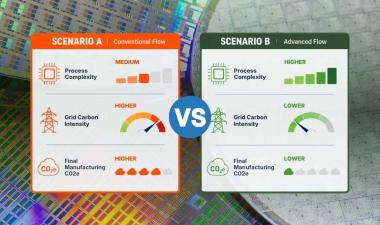
Why Your Carbon Strategy Needs to Shift to the Fab
Two chips, same performance, different carbon footprint. See why decision-grade carbon modeling is essential for shaping sustainable chip decisions.

Beyond the Resist: Why Lithography Isn't the Real PFAS Problem in the Fab
Our latest analysis using the TechInsights Manufacturing Carbon Module reveals a striking truth: Fluorine-free photoresist is the easy part of the PFAS problem. The real, structural challenge is dry etch.

The End of the Carbon Estimate: Why Semiconductor Procurement Now Requires Hard Data
A recent shift in EU sustainability regulations shows carbon reporting is evolving into a supplier deliverable, requiring semiconductor companies to provide precise, product-level emissions data.

Carbon in the Age of AI Chips
In 2026, the biggest carbon decisions in semiconductor design aren't made at the reporting stage — they're made at the design table. AI accelerators, high-bandwidth memory, and advanced node manufacturing are concentrating embodied emissions faster than most teams can measure. This Earth Day, TechInsights' sustainability experts break it down.

Your Top Questions About Carbon Trust Assurance for EcoInsights Answered
TechInsights recently hosted a live webinar with Carbon Trust experts to discuss the addition of third-party assurance to the EcoInsights platform — a milestone that marks a new standard for credibility in semiconductor product carbon footprint (PCF) reporting. Here are the most important questions from that conversation, answered.

The Authoritative Information Platform to the Semiconductor Industry.