Wearables • Teardown analysis
Apple Watch
Series 11 5G
What It Reveals About the Future of Wearable Engineering
Smartwatches were already among the most complex devices to design. Then Apple raised the bar again. With the Apple Watch Series 11 5G, the industry is seeing a new level of integration; bringing advanced connectivity, sensing, and processing into one of the smallest and most constrained form factors in consumer electronics.
On the surface, it’s another step forward in wearables. But for anyone in product development, sourcing, or competitive strategy, the real question is, how did they build it, and what does it cost to do so?
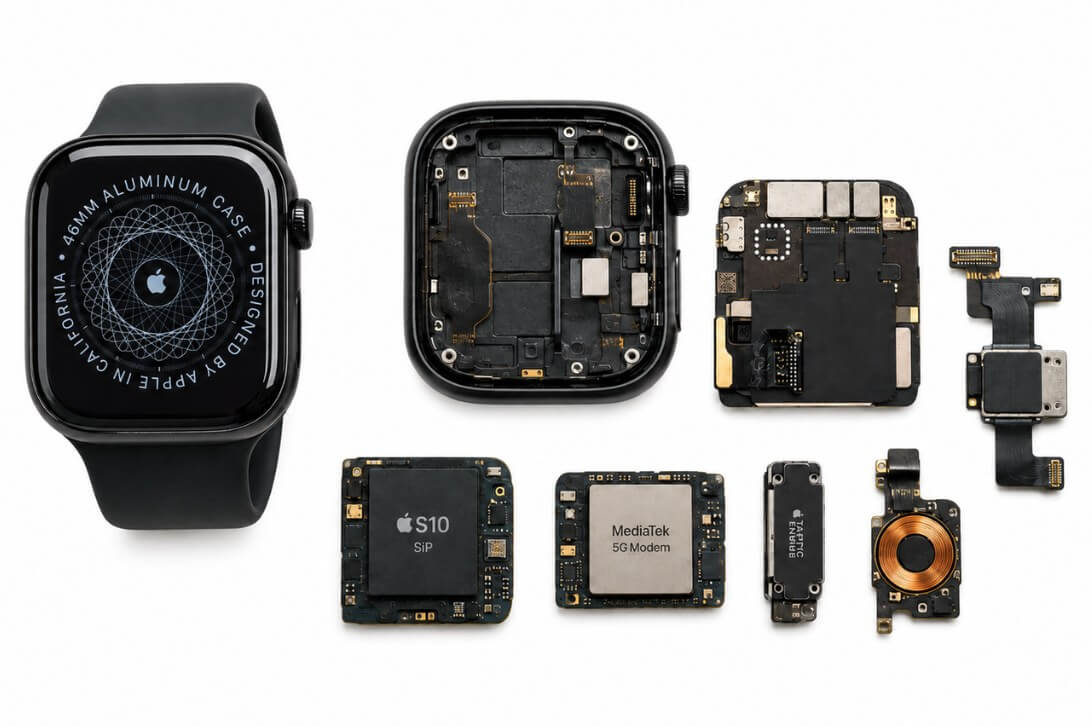
Architecture at a glance
A smaller product with bigger engineering pressure.
Smartphones have space. Wearables don’t. Every generation of Apple Watch has pushed system integration further, but the Series 11 5G represents a step change in how much functionality can be condensed into a single device.
SiP architecture consolidates processing, memory, and connectivity into a compact wearable footprint.
Every improvement competes with battery life, heat, and space in an extremely tight envelope.
Health and motion sensing remain a central differentiator, both technically and commercially.
5G creates tighter constraints around antenna placement, front-end design, and power behavior.
This isn’t just iteration.
It’s engineering under extreme constraint.
Request the Report
Why it matters
Specs tell you what changed. Teardowns show why it changed.
For product, sourcing, and strategy teams, the value is in understanding how suppliers, packaging choices, and integration decisions translate into cost, performance, and margin pressure.
Supplier visibility
Clearer
See where design wins and component choices matter most.
Cost structure
Sharper
Understand where value concentrates across the build.
Visible
Clearer
Battery, thermal, and RF constraints are easier to interpret.
Roadmap signal
Useful
A strong reference point for future wearable products.
Go inside the teardown
Access the full deep dive for component analysis, system architecture, supplier identification, and BOM insight.
Free account and login required to view.