
Discrete and Power Cost and Price Model
End-to-end cost and price model for high-power silicon ICs and discrete devices, and compound semiconductors.
A self-contained and comprehensive solution model that stands alone, serving various purposes such as benchmarking, price evaluation, and market research, among others. It caters not only to Purchasing Departments but also finds relevance for Integrated Device Manufacturers (IDMs), Original Equipment Manufacturers (OEMs), fabless semiconductor companies, analysts, materials enterprises, consultants, electronics firms, and a wide array of industries. Notably, this model holds particular significance within the automotive sector.

To understand this evolving landscape, you need a strong industry-leading business analysis tool.




Market Analysis Solutions




End Market Analysis:





The Semiconductor Manufacturing Economics Advantage
These products give any organization unique and detailed insights into the semiconductor supply chain. Customers include the world’s largest IDMs, foundries, fabless, electronics systems, automotive companies, equipment OEMs and materials suppliers, analysts, universities, and start-ups.
Supported Assembly Processes:
Over 300 processes by company, voltage, and processes.
Supported Wafer Size:
100mm, 125mm, 150mm, 200mm, and 300mm.
Supported Cost Elements:
Wafer cost, wafer test, packaging and final test on 7 (seven) entries.

Apple iPhone 18 Memory Costs: DRAM & NAND Price Pressure
DRAM and NAND prices are rising through the iPhone 18 launch. See what higher memory costs could mean for Apple, AI, BOM costs, and smartphone strategy.

Apple iPhone 18 Pro: A20 Pro, Camera, C2 Modem & Key Changes
Explore what is new in the Apple iPhone 18 Pro and Pro Max, including the 2 nm A20 Pro, variable-aperture camera, C2 modem, cooling, and battery.
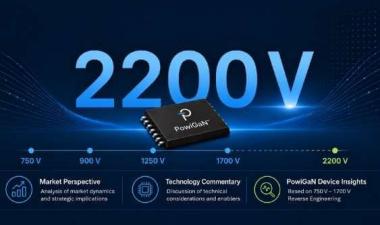
Can 2200 V PowiGaN Challenge Silicon Carbide?
Access TechInsights’ special report on Power Integrations’ 2200 V PowiGaN demonstration and its potential impact on high-voltage power semiconductor markets.

The Authoritative Information Platform to the Semiconductor Industry.