High Performance Computing
From SoC floorplans to MLPerf-validated AI server performance, gain the independent intelligence needed to lead in high-performance and AI-driven compute markets.
Key Benefits
The High Performance Compute – Platform Bundle from TechInsights delivers comprehensive, integrated intelligence across the full HPC and AI accelerator ecosystem—from silicon to system.
By combining independent technical teardown and die analysis, accelerator card and server benchmarking, rack-scale performance characterization, physical-layer power delivery and signal integrity imaging, and enterprise datacenter bill of materials analysis into a single product, this bundle provides engineers, architects, strategists, and procurement teams with the vendor-neutral depth needed to make faster, more confident decisions.
Whether evaluating next-generation AI accelerator platforms, validating supplier claims, benchmarking competitive implementations, or modeling total cost of ownership, subscribers receive a consistent, multi-layered view of the technologies and systems shaping the future of high performance computing.
What You'll Receive
Technical Teardown & Reverse Engineering
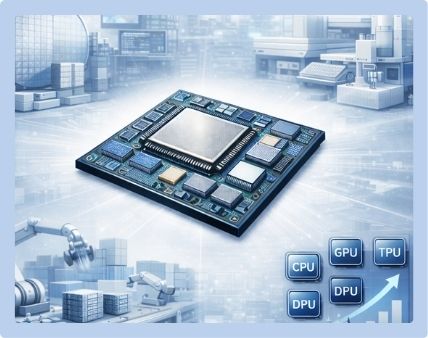
In-depth teardowns of CPUs, GPUs, TPUs, DPUs, and networking hardware, including chiplet SoCs, advanced packaging, HBM analysis, and emerging co-packaged optics. (Available now)
AI Accelerator Card Benchmarking
Independent card-level performance, power, and thermal validation using external AC instrumentation—not telemetry—with true performance-per-watt metrics across inference workloads. (Available now)
AI Server Benchmarking
Single-node, third-party system validation of fully configured AI server platforms, measuring real electrical and thermal behavior tied directly to workload performance. (Available now)
Rack-Scale Performance Benchmarking
Multi-node cluster characterization via dedicated bare-metal rack allocations, covering distributed workloads, fabric efficiency, and node-to-node power variance. (Coming soon)
Power Delivery & Signal Integrity Analysis
Non-destructive 3D X-ray imaging of power delivery networks and signal interconnects across the full accelerator stack, from processor package to server board. (Coming soon)
Enterprise Datacenter Teardown Analysis
IC identification, costed BOM spreadsheets, high-resolution board photography, die images, and full RF and system block diagrams for datacenter products. (Available now)
Related Case Studies
Using TechInsights’ Mobile RF product to predict semiconductor equipment requirements for foundry and IDM customers
Using TechInsights’ Mobile RF product, a leading semiconductor equipment manufacturer was able to analyze RFIC die and packaging trends from cutting-edge 5G devices to accurately forecast semiconductor equipment requirements and anticipate future foundry and IDM customer needs years in advance.
Applications
Hyperscalers and enterprise infrastructure buyers use independent card-, server-, and rack-level benchmarking to validate supplier performance claims, compare platforms under consistent methodology, and support procurement and facility planning decisions with defensible energy-to-solution metrics and costed bills of materials. AI server and accelerator vendors leverage third-party benchmarking data to validate performance-per-watt claims, identify throttling behavior or power reporting discrepancies before customers do, and strengthen competitive positioning in RFP responses.
Integrated device manufacturers, fabless semiconductor companies, and foundries benchmark silicon performance across card, server, and rack scale, recover physical visibility into how their devices are powered and interconnected in deployed platforms, and use die floorplan analysis and packaging insights to inform technology roadmap decisions.
Engineering and platform teams correlate workload execution with measured power and thermal response, obtain physically measured power delivery network geometry to replace simulation assumptions, and access process node and die-level data to accelerate chip and packaging design. Strategy, competitive intelligence, and investment teams track platform performance evolution across generations and vendors, understand the physical implementation strategies of leading HPC systems, and quantify workload energy intensity and component cost structures to support competitive analysis and capital allocation decisions. Sales and marketing leadership replace peak marketing claims with independently measured efficiency metrics and use vendor-neutral data to strengthen customer-facing materials and go-to-market positioning.

Apple A20 Pro: Inside the iPhone 18 Pro’s TSMC 2nm Processor
TechInsights analyzes Apple’s A20 Pro processor, revealing TSMC N2 gate-all-around technology, expanded AI and graphics processing, and a new side-by-side memory packaging architecture.

iPhone 18 Pro Max Unboxing and First Look
Watch TechInsights unbox the Apple iPhone 18 Pro Max before our experts begin detailed teardown and semiconductor analysis.
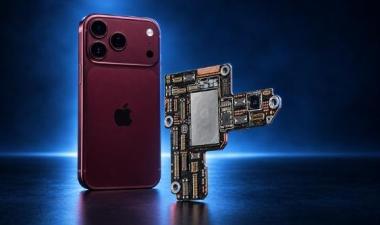
Apple iPhone 18 Pro Max Teardown: A20 Pro, X80 and Apple N1
See what TechInsights’ preliminary teardown reveals about the iPhone 18 Pro Max, including its A20 Pro processor, Qualcomm X80 modem, Apple N1, and new mmWave hardware.

The Authoritative Information Platform to the Semiconductor Industry.